
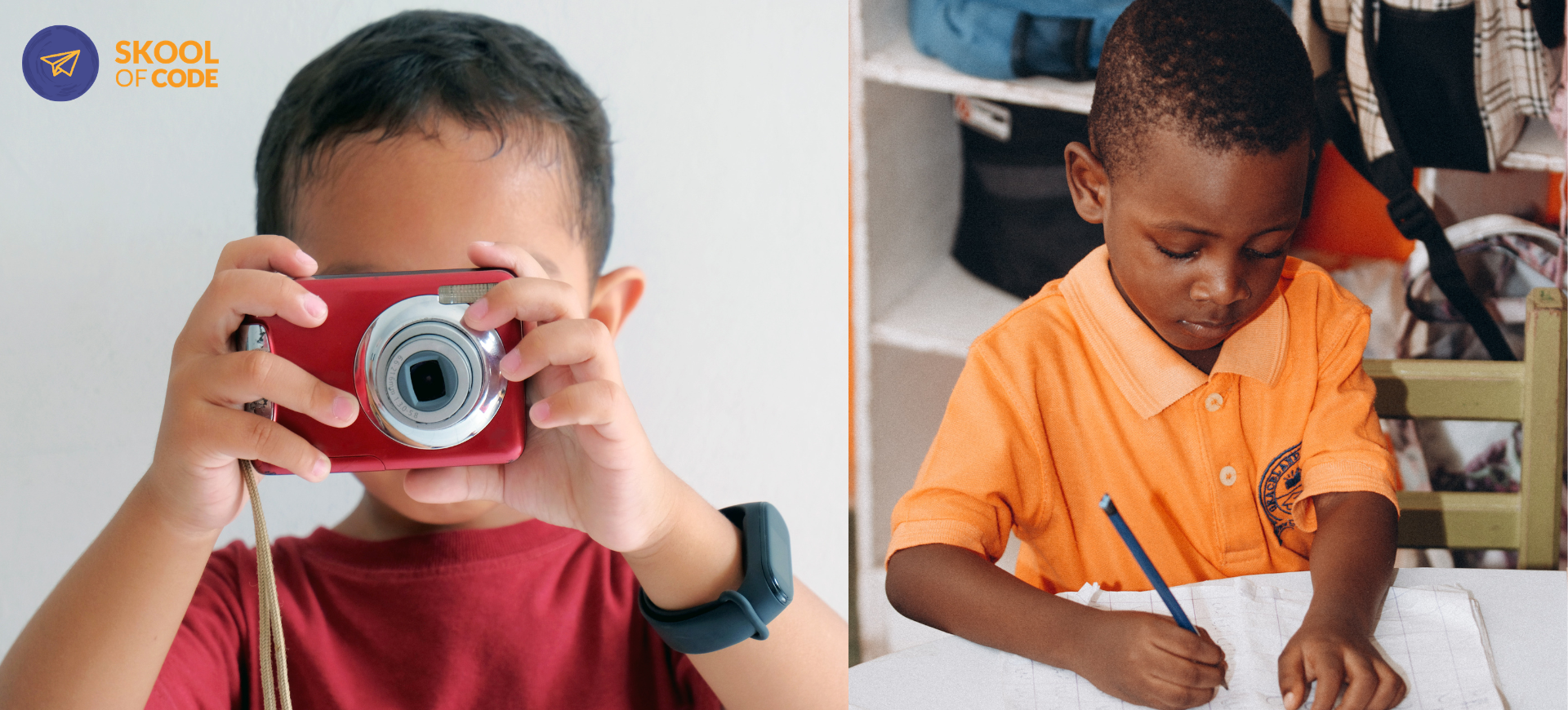
Vlogging vs Blogging for Kids: Why the Shift Matters for Parents
If you ask a ten-year-old today what they want to be when they grow up, “YouTuber” is a top-tier answer. They understand the rhythm of a vlog. They know how to look into a lens, ask for likes, and edit a transition on a smartphone. But if you ask that same child to write a 500-word article explaining how they built their latest Minecraft world, you might see a very different reaction.
We are living in an era where vlogging is the default mode of digital expression for Gen Alpha. Blogging, once the cornerstone of the early internet, feels like “homework” to many kids. In our experience at SkoolOfCode, we see this gap daily. Kids are highly proficient in visual communication but often lack the structured, technical literacy that comes with text-based creation.
Understanding the tension between vlogging vs blogging for kids isn’t just about choosing a hobby. It is about understanding which skills your child is building—and which ones they might be missing.
Why Kids Choose the Lens Over the Keyboard
It is easy to see why vlogging has won the popularity contest. Video is frictionless. A child can pick up a parent’s phone, hit record, and be “creating” in seconds. There is no spelling to worry about, no grammar to check, and the feedback loop is nearly instantaneous.
Visual platforms are designed for high-frequency social proof. A “like” on a video feels more visceral than a comment on a blog post. For a child, the performative nature of vlogging is exciting. It mimics the entertainment they consume. However, this ease of entry often hides a lack of depth.
Blogging, by contrast, has a high barrier to entry. It requires a child to sit with their thoughts, organize them into a hierarchy, and articulate them without the help of a funny face or a jump cut. It is slower, quieter, and requires a different kind of “digital muscle.”
If you’re noticing your child is stuck in a loop of filming without much substance, you might want to book a free trial class to see how we bridge the gap between creative play and technical skill.
The “Hidden” Skills of Blogging
When we talk about vlogging vs blogging for kids, we aren’t saying video is bad. Video production involves lighting, framing, and basic editing. But blogging develops a specific set of high-leverage skills that are increasingly rare in the “short-form” era.
1. Structured Thinking and Logic
A blog post requires an introduction, a body, and a conclusion. To write a good one, a child has to decide what is most important and what is a supporting detail. This is exactly the same logic used in online coding classes for kids. If you can’t organize a paragraph, it’s very hard to organize a complex block of code.
2. Technical Web Literacy
Vlogging usually happens inside a “walled garden” like YouTube or TikTok. The platform handles everything. Blogging often leads kids toward the “back end” of the web. They start asking how to change a font, how to embed an image, or how to use a custom domain. This is often the first step toward web designing with EduBlocks, where they move from being users to being builders.
3. SEO and Audience Awareness
Blogging teaches kids that the internet is a searchable database. They learn that if they want people to find their post about “The Best Scratch Games,” they need to use those specific words. This is a fundamental lesson in how information is organized globally.
Vlogging vs Blogging for Kids: A Comparison for Parents
| Feature | Vlogging | Blogging |
|---|---|---|
| Primary Skill | Oral communication & Performance | Written communication & Structure |
| Technical Focus | Video editing & Framing | Web layout, HTML basics, & SEO |
| Pace | Fast, high-energy | Slow, reflective |
| Thinking Style | Linear/Narrative | Hierarchical/Categorical |
| Platform | Social Media (YouTube/TikTok) | Personal Website/Web Apps |
The Shift from Consumption to Creation
The real risk isn’t that kids are vlogging; it’s that they are often just “performing” for an audience without building anything of lasting value. Much of what kids call vlogging is actually a form of passive consumption—they are mimicking trends they saw five minutes ago.
We often talk to parents about summer screen time for kids and how to shift the focus toward creation. Blogging is a powerful tool for this shift because it demands a higher level of “active” brain power. You cannot “accidentally” write a well-structured blog post the way you can accidentally film a viral 15-second clip.
If your child is curious about how the internet actually works behind the screen, they can book a free trial class to explore the logic and code that powers the platforms they love.
How Parents Can Help Balance the Two
You don’t have to ban vlogging to encourage blogging. In fact, the two work best together. Here is how we suggest parents help their kids find a balance.
Start with “Scripting”
If your child loves making videos, ask them to write a “blog post” version of the script first. This forces them to think through the points they want to make before they hit record. It turns the vlog from a random stream of consciousness into a structured piece of content.
Use a “Hybrid” Approach
Many kids find a blank white page intimidating. Encourage them to start a “Micro-blog” on a platform where they can post one image and three sentences of text. This lowers the pressure while still requiring them to use their writing skills.
Connect it to Their Hobbies
Don’t ask them to “write an essay.” Ask them to write a tutorial for their favorite game or a review of a new tool they’ve used. When the topic is something they are already an expert in, the writing feels less like a chore and more like sharing knowledge.
Why the “Why” Matters
In 2026, the ability to communicate clearly in writing is more valuable than ever. As AI becomes better at generating generic content, the value of a human voice that can structure a unique argument or explain a complex project increases.
Vlogging is a great way to build confidence and “camera presence.” But blogging is where the deep work happens. It is where a child learns that their ideas have weight, and that they have the power to organize those ideas into something that lasts.
At SkoolOfCode, we don’t just teach kids how to type; we teach them how to think. Whether they are building a game in Scratch or a website in Python, the underlying skill is the same: the ability to turn a messy idea into a structured reality.
If you are ready to help your child move beyond the “like and subscribe” loop and start building real digital foundations, you can book a free trial class today. Let’s see what they can create when they have the right tools in their hands.
— The SkoolOfCode Team